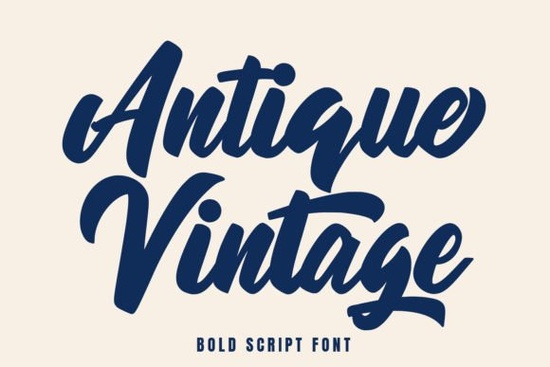
If you need a typeface that reads clearly at a distance but still feels hand-drawn, Antique Vintage Font delivers exactly that. It is a brush script built with thick, prominent strokes that give each character a solid presence on the page. The letters connect smoothly, so your text keeps a natural handwritten rhythm without looking messy. Designers, print-on-demand sellers, and small business owners often pick this style when they want a bold signature look that remains approachable for everyday branding.
What makes this brush script stand out for everyday design work?
The consistent weight of the strokes does most of the heavy lifting. Because the lines are uniformly bold, the typeface holds up well on textured backgrounds, kraft packaging, and dark merchandise. The interconnected letters create a steady baseline, which means you spend less time manually adjusting kerning and more time finalizing your layout. If you have tried lighter scripts that disappear on busy patterns, you will notice how this one maintains readability even when scaled down for product labels or small stickers. When you want a completely different mood, you might also test softer romance history script options to see how stroke weight changes the overall feel of your composition.
Which projects actually benefit from thick, flowing lettering?
Heavy brush scripts work best when they have room to breathe. I recommend using them for:
- Apparel and tote bags: The bold strokes print cleanly on cotton and canvas without fading into the fabric weave.
- Product packaging and jar labels: Thick lettering stays legible on curved surfaces and matte finishes.
- Event signage and welcome boards: The handwritten flow adds warmth while remaining easy to read from a few feet away.
- Social media quotes and shop banners: High contrast between the heavy letters and negative space helps your message stop the scroll.
If your brand leans toward rustic or outdoor themes, you could also compare it with hunting season brush styles to decide which texture matches your product photography best.
How do I pair it with other typefaces without cluttering the layout?
The simplest approach is to let the brush script handle the headline and keep everything else straightforward. A clean sans serif or a narrow serif works well for subheadings, body copy, and contact details. Avoid pairing it with another decorative script, because the competing swashes will make the design feel crowded. When you need a secondary accent, try a light monoline style or a basic geometric font. For a more playful combination, some creators mix it with bluebird melody handwritten typefaces for short callouts, but they keep the main message in the heavier typeface to preserve visual hierarchy. If you prefer a slightly rougher edge for vintage posters, hickery distressed lettering can add texture to background elements while your primary title stays sharp.
What technical details should I check before installing?
Script fonts behave differently depending on your software and file format. Before you start designing, verify a few basics:
- File format: Make sure you have both OTF and TTF versions. OTF usually supports better ligature rendering in professional design programs.
- Software compatibility: Programs like Illustrator, Photoshop, and InDesign handle connected scripts smoothly. Free tools may require you to enable contextual alternates manually.
- Commercial licensing: Check whether your purchase covers personal use, small business sales, or print-on-demand platforms. Licensing terms vary by marketplace.
- Glyph coverage: Review the character set for numbers, punctuation, and special symbols if you plan to use it for pricing, dates, or multilingual text.
You can review the full licensing details and download the latest version of Antique Vintage Font directly from the creator’s page. If you want to explore similar weights in the same family, you can also browse antique vintage script collections to find matching alternatives.
How do I get the cleanest print results on different materials?
Thick brush scripts can look slightly different once they leave your screen. On dark garments, use a white or light ink base and avoid excessive halftone screening, which can break up the solid strokes. For paper goods, choose a matte or uncoated stock to keep the handwritten texture visible without unwanted glare. When cutting vinyl or heat transfer material, increase the cut pressure slightly and use a slower blade speed so the connected letters do not tear at the joints. Always run a small test print or cut before committing to a full production batch.
Before you finalize your next design, run through this quick checklist:
- Confirm the font file matches your design software’s preferred format.
- Enable contextual alternates and ligatures to preserve the natural connections.
- Pair the script with a simple sans serif or serif for body text.
- Check commercial licensing for your specific sales channel.
- Print or cut a small sample on your actual material to verify stroke weight and spacing.
Once those steps are clear, you can move straight into layout and production without second-guessing readability or usage rights. Save your test files, note the settings that worked best, and reuse them for future product runs.
Learn More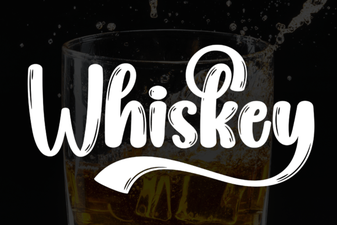 Whiskey Font Styles for Branding and Design
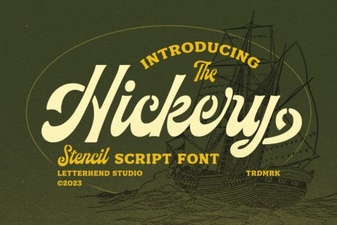 Hickery Font: Your Next Creative Project Partner
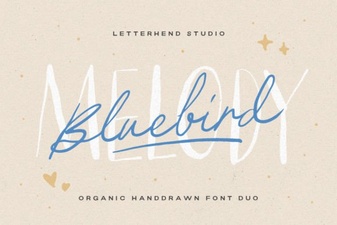 Bluebird Melody: a Creative Font for Projects
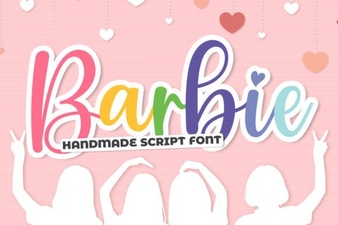 Barbie Fonts for Creative Design Projects
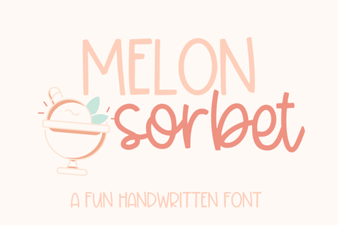 Melon Sorbet Font for Fresh Web Designs
 Behappy Font: Joyful Designs & Creative Uses