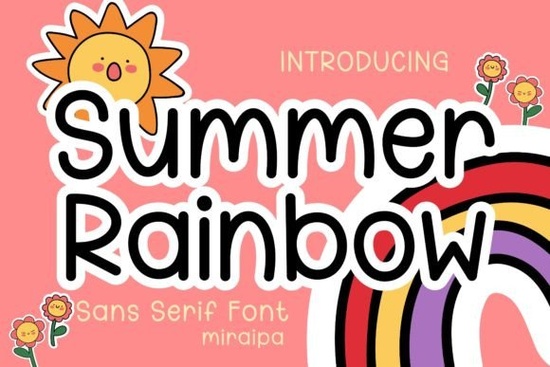
If you need a typeface that feels like a warm afternoon breeze, Summer Rainbow Font delivers exactly that. This handwritten sans serif style uses soft, rounded letterforms to create a friendly look without sacrificing readability. Whether you design greeting cards, build children’s book layouts, or create print-on-demand apparel, the smooth curves keep your message clear while adding a lighthearted touch.
What makes this typeface work for seasonal projects?
The strength of this font lies in its balance between playfulness and structure. Many handwritten styles lean too heavily into casual scribbles, which causes legibility issues at smaller sizes. This design avoids that trap by maintaining consistent spacing and clean baselines. The rounded terminals give it a carefree vibe, but the underlying sans serif skeleton keeps it grounded. You can safely use it for short headlines or product tags without worrying about visual clutter.
For crafters and small business owners, readability matters just as much as style. When printing on textured cardstock or heat-pressing vinyl, you need letters that hold up across different materials. The uniform stroke width and open counters help ink and cut files render cleanly, reducing blurred edges or misaligned cuts.
Where does it fit best in your workflow?
This font shines in projects that call for a cheerful, optimistic tone. Think birthday invitations, summer camp flyers, nursery wall art, or handmade soap labels. Because the characters are naturally wide and well-spaced, you can scale them up for bold statements or keep them modest for subtle accents. Here are a few practical applications:
- Children’s products: Storybook covers and worksheets benefit from gentle curves that feel safe and inviting.
- Print-on-demand merch: T-shirts and mugs with short phrases print clearly without overwhelming the layout.
- Small business branding: Bakery menus and boutique tags gain a personal touch that still looks professional.
- Digital content: Instagram quotes and email headers stay legible on mobile screens thanks to open letterforms.
How do you pair it with other typefaces?
Since this style already carries personality, it works best when paired with simpler, neutral fonts. A clean geometric sans or a classic serif can ground your layout while letting the handwritten elements take center stage. If you prefer working with warm, earthy typefaces for seasonal branding, you might explore options like rich brown sans serif styles to create a balanced contrast. Avoid combining multiple decorative fonts in the same composition. Stick to one expressive typeface for headlines and reserve straightforward fonts for body copy.
When setting up your design file, pay attention to line height and tracking. Handwritten fonts often need extra breathing room to prevent letters from touching awkwardly. Increase your leading by ten percent and test a few print proofs before finalizing your artwork. This small adjustment makes a noticeable difference in how polished the final piece looks.
What should you verify before downloading?
Before committing to any font for commercial work, check the licensing terms to ensure your intended use falls within the allowed scope. Confirm that the download includes the file formats you need, such as OTF or TTF. If you want to browse similar rounded typefaces, you can view this handwritten sans serif collection to find the right match for your project.
For designers who want to test the style before purchasing, you can also search for Summer Rainbow Font to preview character sets and check spacing. Reviewing the glyph panel will save you time when finalizing customer orders.
Quick setup checklist
Keep these steps in mind to get the most out of your font files and avoid common layout mistakes:
- Install both OTF and TTF versions if available, then restart your design software.
- Test headlines at actual print size to verify that rounded edges do not fill in.
- Pair the font with a neutral sans serif for body text to maintain hierarchy.
- Adjust tracking slightly upward if letters feel too tight on textured backgrounds.
- Review the commercial license to confirm coverage for print-on-demand or client work.
With a little preparation, this typeface can become a reliable go-to for lighthearted branding. Start with a small test layout, check how the letters interact with your chosen colors, and adjust spacing until the composition feels balanced. Once you have a working template, you can reuse it across cards, labels, and social graphics without starting from scratch.
Explore Design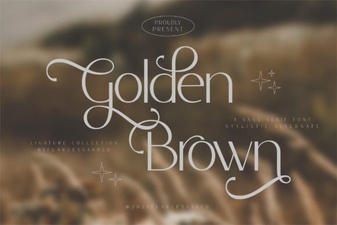 Golden Brown Fonts: a Design Guide
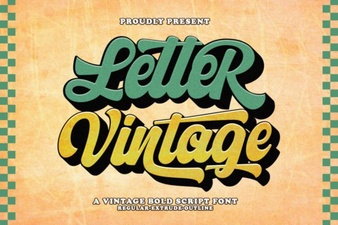 Vintage Lettering Fonts for Creative Design Projects
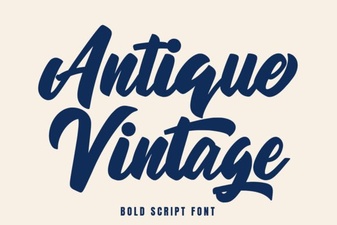 Timeless Antique Fonts for Creative Projects
 Whiskey Font Styles for Branding and Design
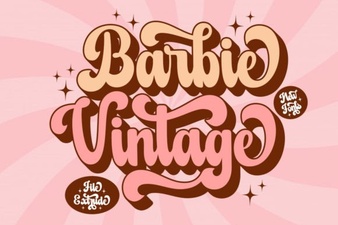 Designing with Vintage Barbie Extrude Font Style
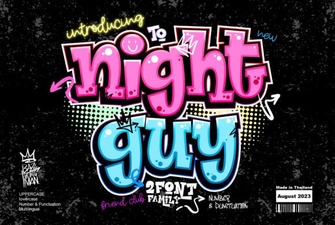 Night Guy Font: Creative Typography Projects